
“Are you fighting me?” An invitation to a beautiful banquet.
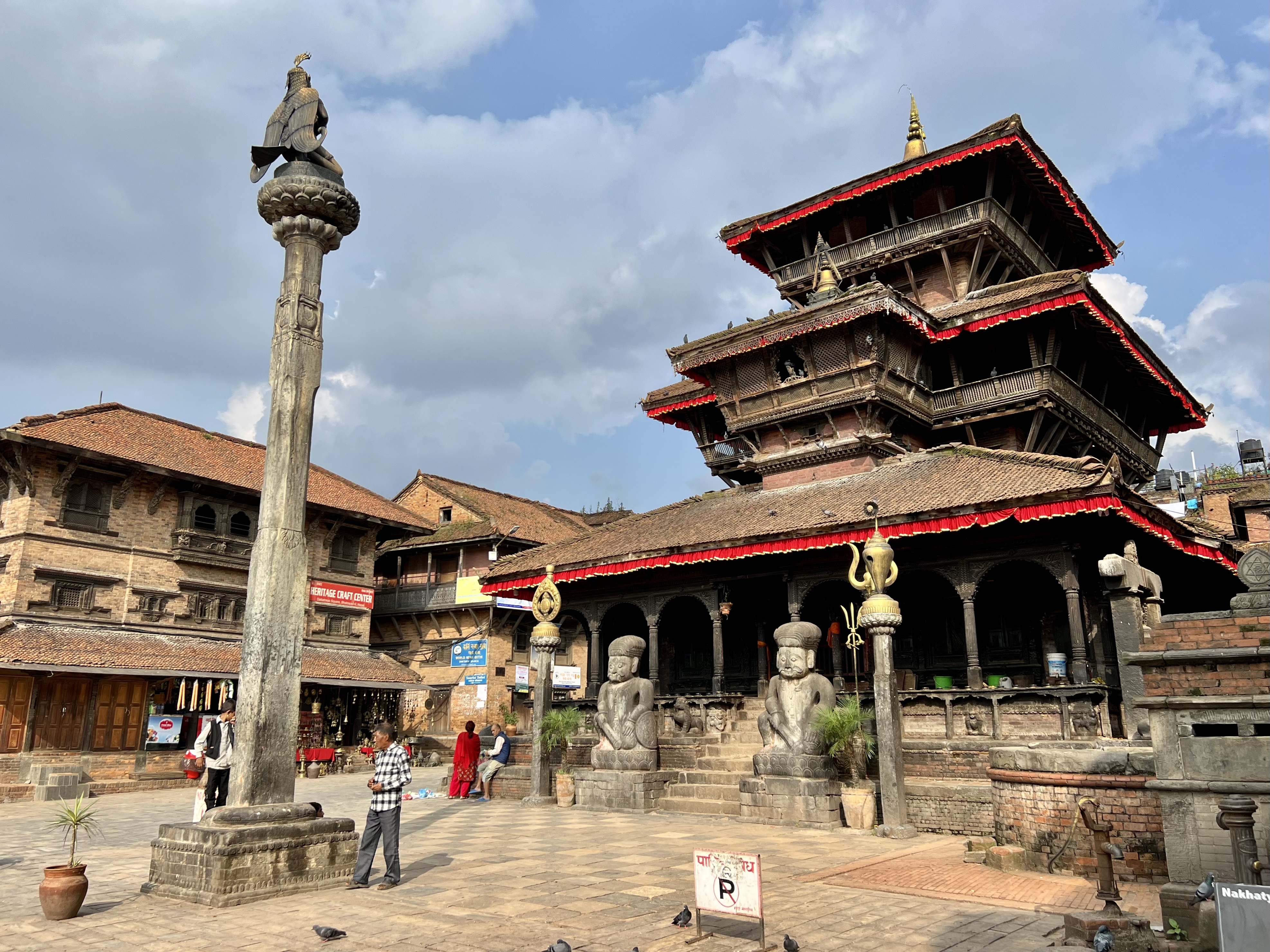
I close the taxi door, thanking my driver, and glance around Dattatraya Square. The morning sun shines over everything, painting this bustling corner of the historic district of Bhaktapur in marvelous color and light. Inhaling deeply once, then again, I start upward through a slanted cobblestone alleyway. If my map is accurate, my destination is just ahead and to the left, a mere five-minute walk.
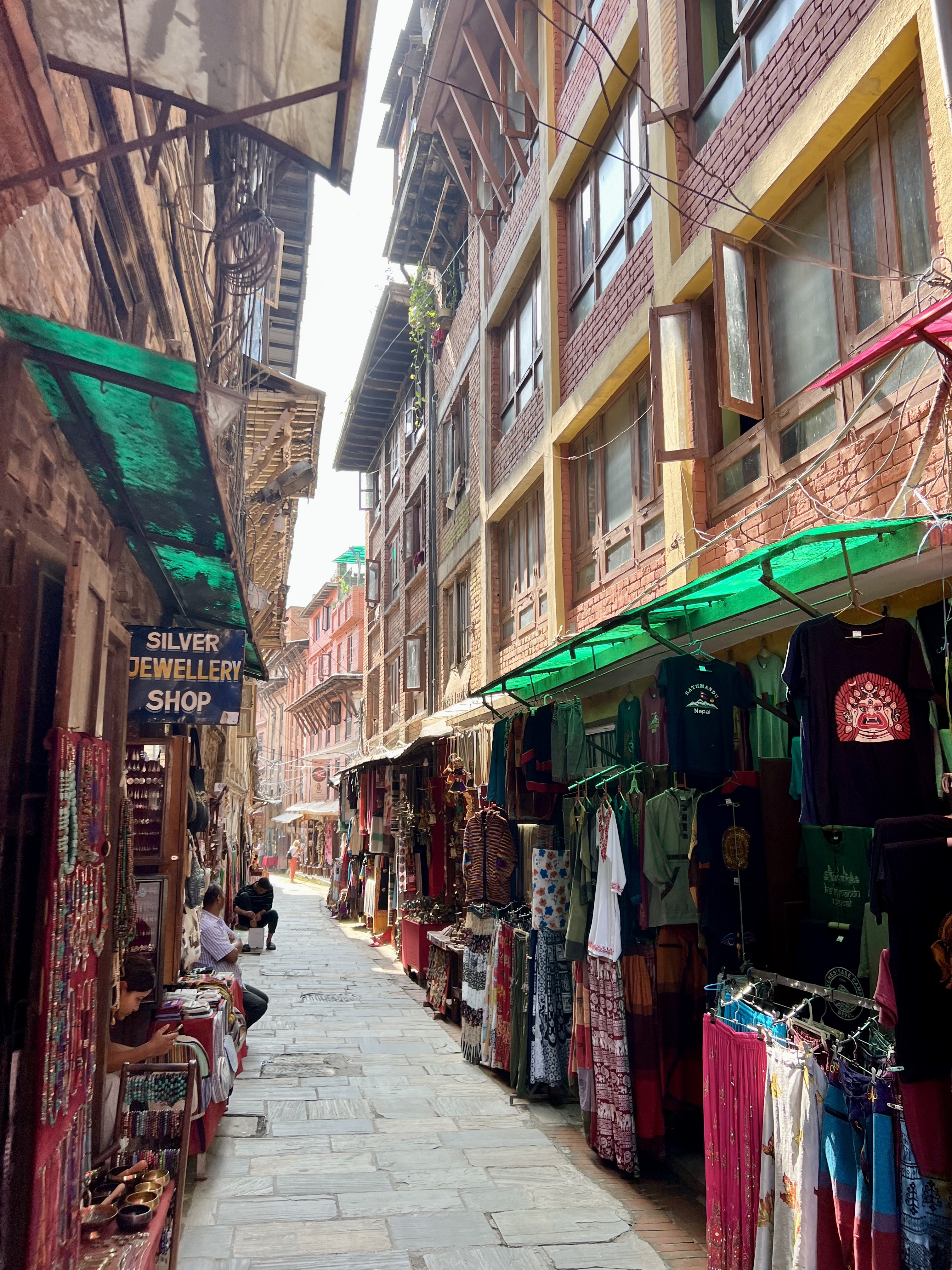

I round three quiet corners: left, then a quick right, then left again, approaching a small family temple in a peaceful courtyard, and gazing at what I believe to be my terminus. A neat, charming guesthouse – recommended to me by a recent acquaintance and friend in Kathmandu when I mentioned a longing to experience some quiet rest in the valley before embarking on a trek in the mountains – stands four stories high in front of me.
A radiant voice calls out to me from above, ‘Namaste!’, and I look up. Overhead, standing on the balcony of the highest floor, is a kind-faced woman maybe two decades my senior in a bright yellow kurta. She instantly reminds me of sunshine. My Nepali is limited, as is her English, but through gestures and giggles, we agree to meet at the front door so she can show me to my accommodation. She inquires about my friend, sharing some fond memories of him, and escorts me up two flights of stairs interrupted by tile floor landings, ending at a cozy room on the third floor.
I learn quickly that this woman is the keeper of the house, along with her husband. Twice, with great openness and generosity, she asks me whether I have eaten breakfast and if she can serve me some food and drink. This sounds wonderful, and my hungry stomach churns at the thought of food, or perhaps coffee after the early morning. Still, not wanting to inconvenience her, I reply truthfully that I had in fact enjoyed a small breakfast at my lodging in Patan before gaining a taxi here, and I thank her but decline the offer.
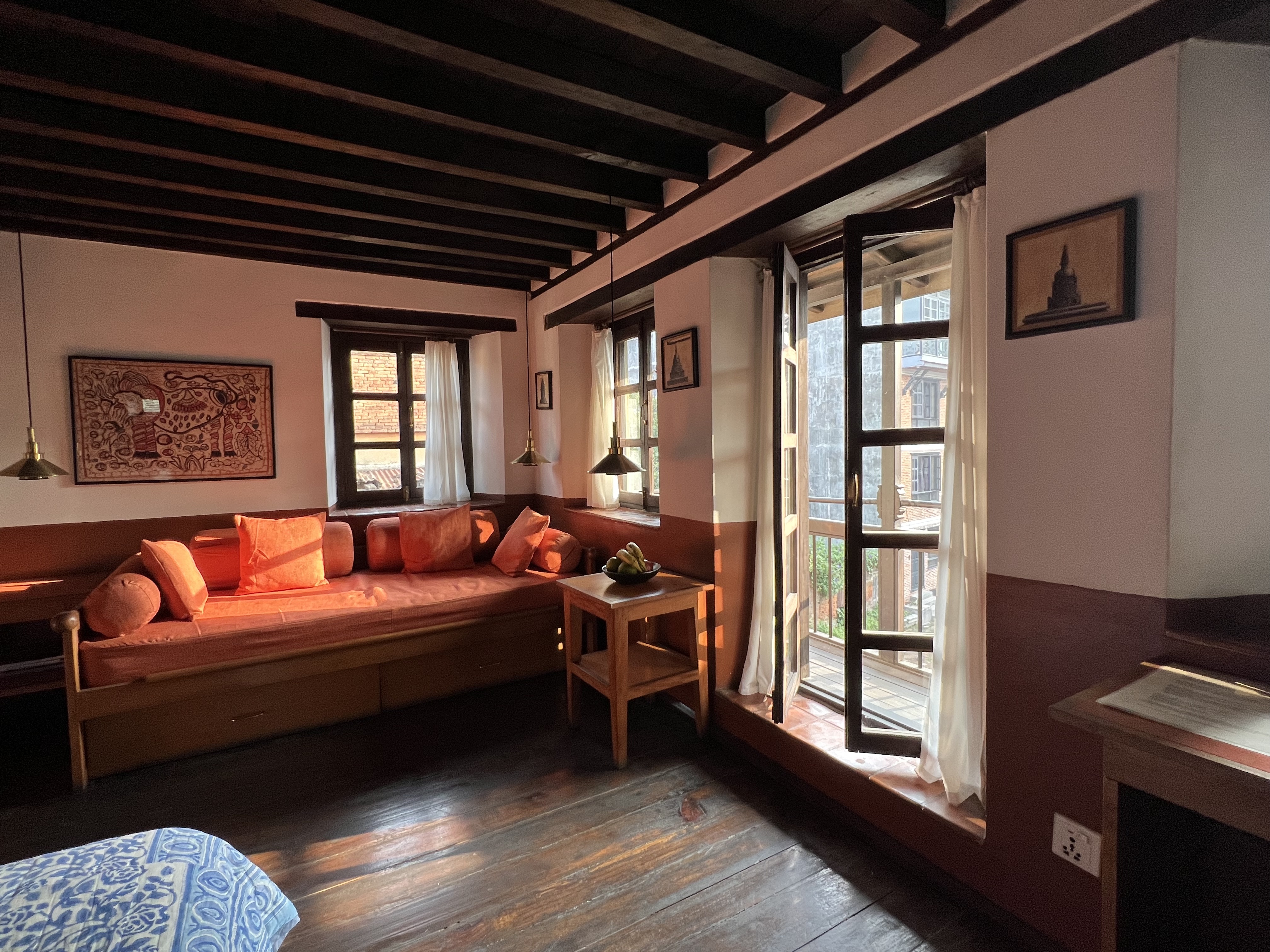
I settle into my room, a serene and architecturally stunning space. Terracotta- and cream-colored walls circumnavigate dark wood floors which mimic the rustic elegance of the dark beams overhead lining the ceiling. The bed quilt is patterned in a beautiful cerulean blue. French doors along with large windows on two walls let the light pour in, filtered through wispy, angelic white curtains. A balcony outside looks over the serene courtyard I was standing in just minutes before.
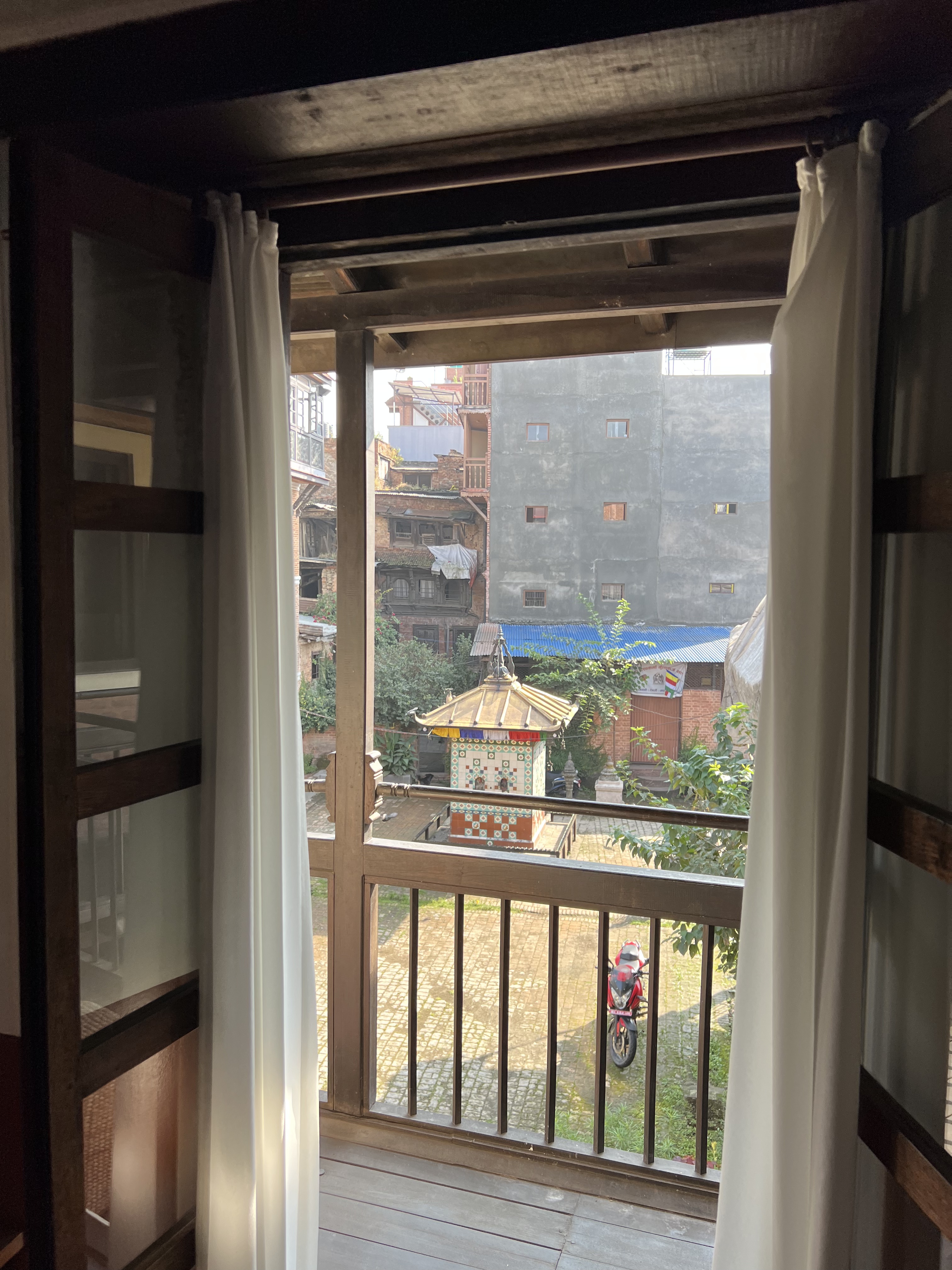
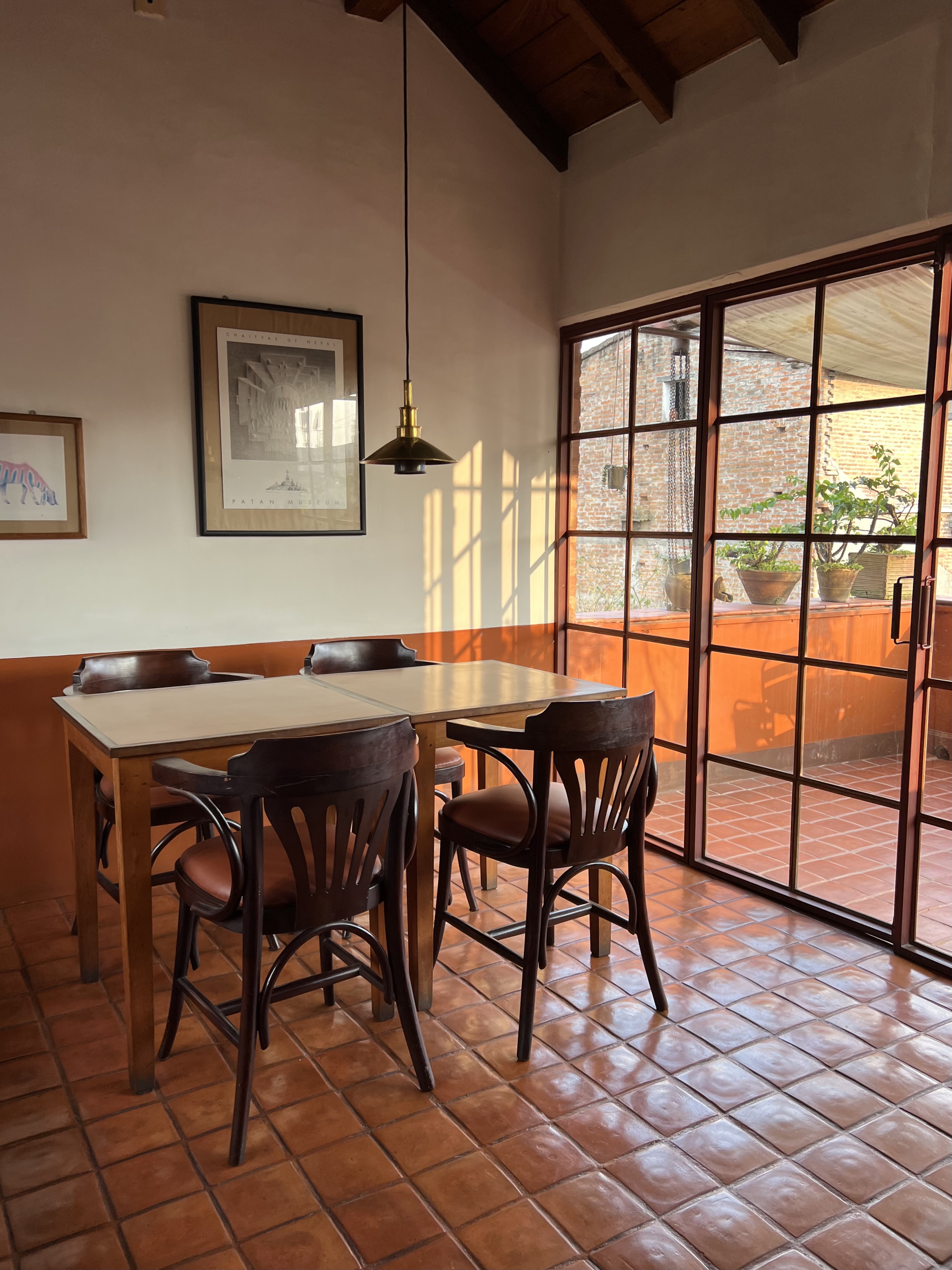
After a few moments’ rest, I climb to the upper level of the home, where the kitchen and dining area are situated (this high-kitchen feature, I later learn, is the layout of a typical Newari home). My host once again asks if she can bring me some sustenance, and once again I hesitate. I stammer, ‘Would it maybe be possible to make a cup of coffee?’ to which she replies, ‘Coffee, only? What about breakfast?” I hesitate again and manage to mumble something like ‘Well, maybe, sure, if it isn’t too much trouble.’
With a genuine, playful twinkle in her eyes, a sweetness in her voice, and an auntie-like care, she pretend-socks me in the arm with all gentleness and asks quizzically, ‘Are you fighting me?’ She then smiles widely and bobbles her head side-to-side in the way I am coming to learn is so characteristic of greetings and pleasantries in Nepal.
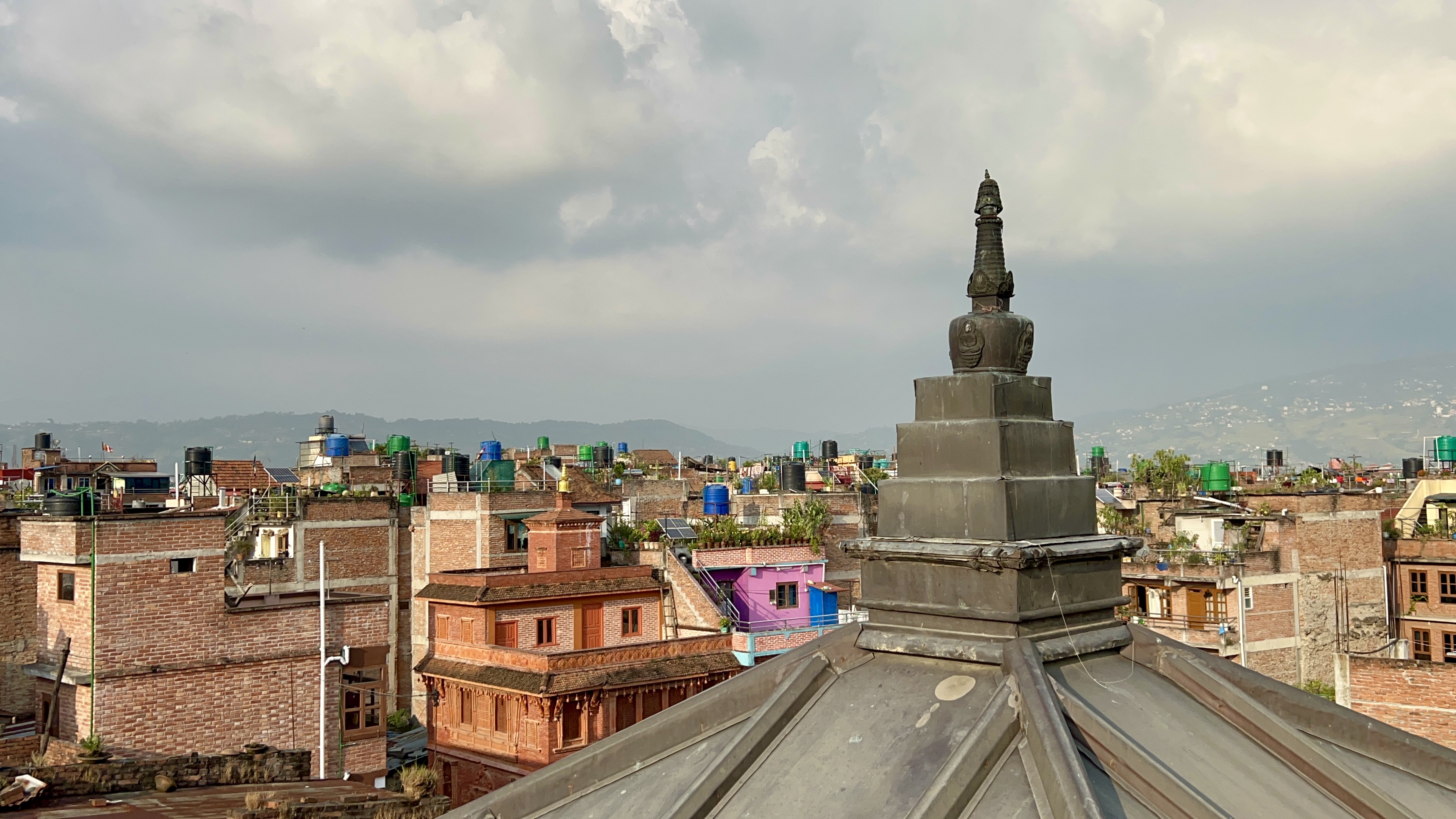
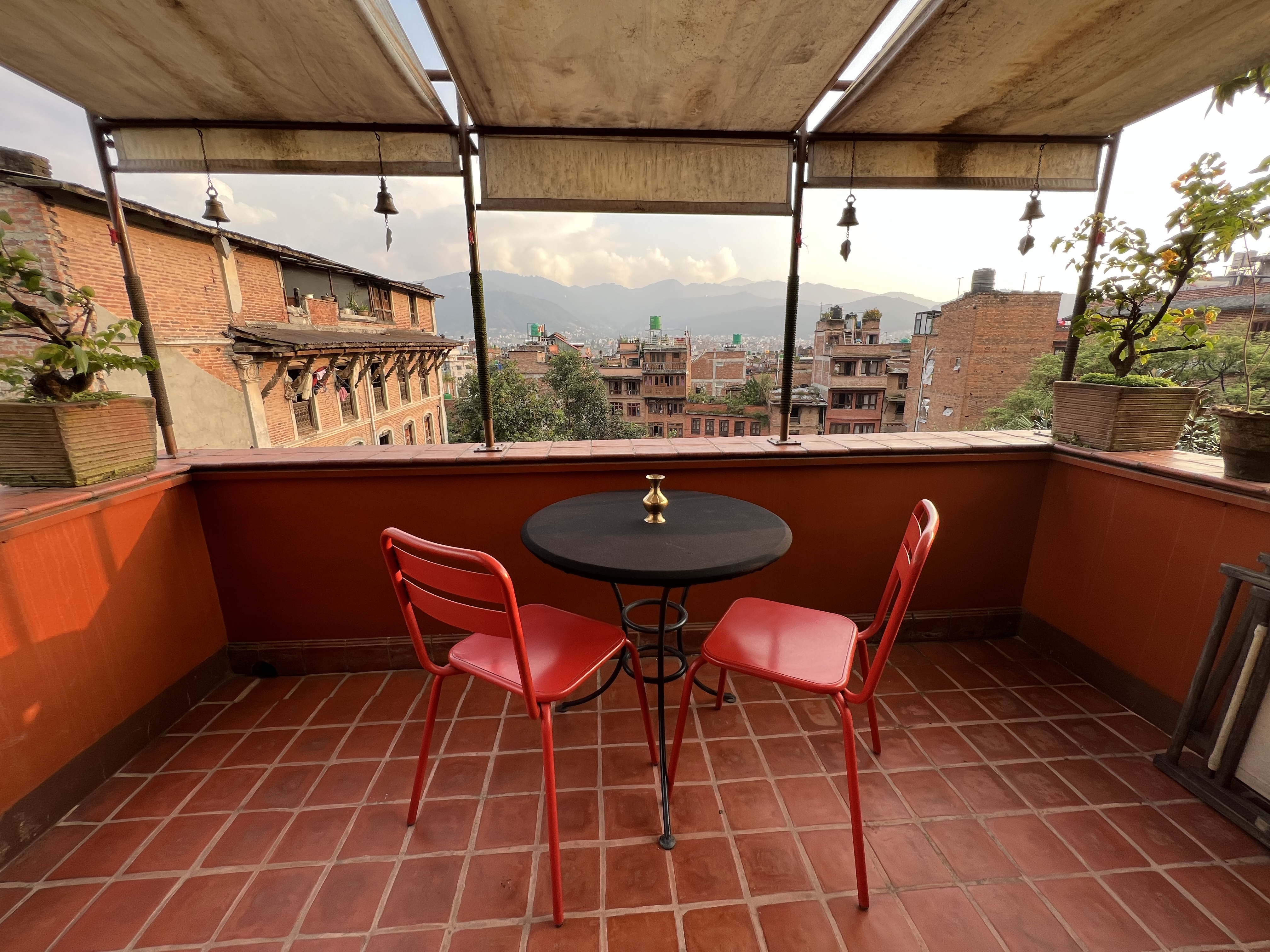
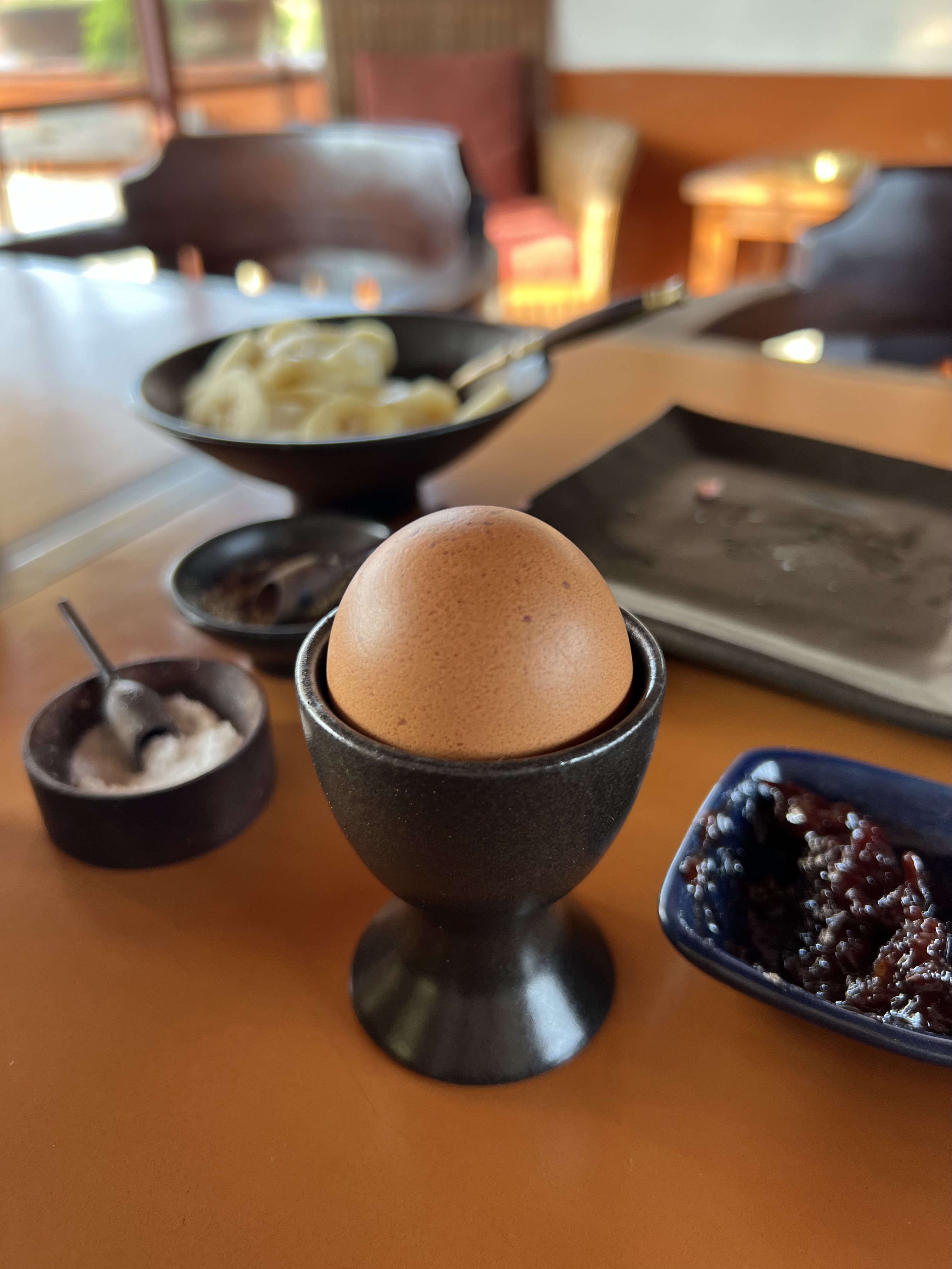
A brief pause ensues, and suddenly we are both overcome with laughter. I give in and accept her offer, and she sets a table outside on the back balcony, overlooking the district itself, buildings extending to the foothills of the mountains to the south. A cool breeze creates music from the small, bell-shaped chimes that hang over the balcony. And a beautiful breakfast feast is laid out before me – toast with an array of cheeses and hand-made jams, a soft-boiled egg, yogurt, vegetables, cured meats, guava juice, and coffee.

And in this place so far from home, and from this woman who may never know the impact that she had on my heart that morning (despite my bumbling, tearful efforts to profusely thank her before I left the district the following day), I felt for the umpteenth time the love and presence of God that has met me in countless ways – through countless faces and moments – these past two years as I have traveled, and throughout my life. And I wonder:
How often do we approach God with a posture of timidity rather than confidence? Of not wanting to ask to much or to inconvenience Him with our thoughts? How often do we limit our prayers to only what we think He can or will do? When verses like Ephesians 3:12 and Hebrews 4:16 tell us that we can approach Him boldly; and James 1:7 and Matthew 7:11 remind us that God delights in giving good gifts. I imagine Him taking in our hesitation and timidity with a playful ‘My child, are you fighting me?’. Because, what can He not do? Nothing is too big for Him. No ask is too great. And sometimes, He has a metaphorical feast in mind when the most we have in mind is a cup of coffee that we’re reluctant to ask for because ‘maybe it’s too small or inconvenient’, or ‘maybe He won’t answer the way I want Him to’, or ‘maybe He won’t answer at all’.
May we learn to approach God as a trusting son or daughter approaches a trusted father for wisdom, guidance, blessing. Not from a heart of demanding gifts, but of asking for big shifts – toward peace, toward grace, toward hope, toward faith, toward provision, toward healing. And not just for ourselves, but for our neighbors, our loved ones, and the world.
 Captivated Me